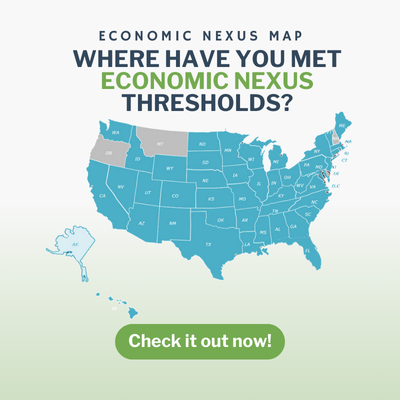
June 21st marks another anniversary of one of the most significant sales tax decisions in U.S. history - the Supreme Court's ruling in South Dakota v. Wayfair, Inc.. While the decision transformed how states enforce sales tax obligations, many growing businesses are still discovering its impact years later.
When the Supreme Court issued its ruling in June 2018, it fundamentally changed the sales tax landscape. Before Wayfair, businesses generally needed a physical presence in a state before they were required to collect and remit sales tax. After Wayfair, states gained the ability to impose sales tax obligations based solely on economic activity within their borders.
Eight years later, the effects are still being felt.
For many businesses, especially those experiencing rapid growth, expanding into new markets, or selling digital products and services, sales tax obligations can emerge long before anyone realizes they exist. What begins as a successful growth story can quietly become a significant compliance risk if economic nexus thresholds are crossed without proper monitoring.
A Quick Look Back at Wayfair
Prior to 2018, it was generally required that a physical presence was there before a state could require a business to collect sales tax.
The Wayfair decision changed that.
The Court determined that states could establish sales tax obligations based on economic nexus, meaning a company's sales activity alone could create a tax collection responsibility, even without offices, employees, or inventory located in the state.
In the years following the decision, nearly every state with a sales tax adopted economic nexus laws. Today, most states impose collection obligations once a business exceeds a specified revenue threshold, transaction threshold, or both.
As a result, businesses can trigger new sales tax obligations simply by growing their customer base.
The Hidden Challenge of Growth
Many businesses focus heavily on revenue growth, market expansion, and customer acquisition. Unfortunately, sales tax compliance often doesn't receive the same level of attention until a notice arrives.
Consider a common scenario:
A software company launches nationally and begins seeing strong sales growth. Revenue increases steadily across multiple states, but no one is actively monitoring economic nexus thresholds. Twelve months later, the company discovers it exceeded nexus thresholds in several states and should have been collecting tax months earlier.
At that point, the company may face:
The issue isn't necessarily negligence. In many cases, the business simply outgrew the processes it originally had in place.
Why Economic Nexus Is Easy to Miss
Unlike physical nexus triggers, economic nexus develops gradually.
There is rarely a single event that alerts a business to the fact that obligations have changed.
Instead, thresholds are often crossed through:
-
Increased online sales
-
Expansion into new geographic markets
-
New customer acquisition efforts
-
Growth in SaaS subscriptions
-
Digital product sales
-
Telecommunications and technology services
Without regular reviews of state-by-state sales activity, businesses may not realize they've created obligations until long after the threshold has been exceeded.
Growth Is Only Half the Equation
Crossing an economic nexus threshold doesn't automatically mean a business must collect sales tax.
The next question is equally important: What are you selling?
Taxability varies significantly by state.
Products and services that are taxable in one state may be exempt in another. This becomes especially complex for:
-
SaaS and cloud-based software
-
Digital products
-
Telecommunications services
-
Professional services
-
Subscription-based offerings
-
Bundled products and services
Businesses often assume their products are taxed consistently nationwide, but that assumption can create significant exposure if taxability determinations haven't been evaluated on a state-by-state basis.
What If You Already Have Exposure?
One of the most common questions businesses ask after discovering nexus exposure is:
"Have we waited too long?"
Not necessarily.
Many states offer programs known as Voluntary Disclosure Agreements (VDAs). These programs allow businesses to come forward proactively before a state initiates contact.
Depending on the state, a VDA may provide:
However, these opportunities are generally available only before a state reaches out regarding the exposure. Once a notice or audit begins, available options become much more limited.
Eight Years Later, Wayfair Is Still Reshaping Compliance
The anniversary of the Wayfair decision serves as a useful reminder that sales tax compliance is no longer driven solely by where your business is located.
Today, growth itself can create obligations.
A business may never open a new office, hire an employee in another state, or store inventory outside its headquarters and still find itself responsible for collecting and remitting sales tax across dozens of jurisdictions.
For finance and tax leaders, that means nexus reviews should become a routine part of growth planning rather than a reaction to an audit notice.
Questions Every Growing Business Should Ask
As you reflect on how your business has grown since Wayfair, consider the following:
-
Have we reviewed our state-by-state sales activity in the last 12 months?
-
Have we evaluated whether we've exceeded economic nexus thresholds?
-
Have we reviewed the taxability of our products and services?
-
Are we monitoring threshold changes and legislative updates?
-
If exposure exists, have we evaluated potential VDA opportunities?
If the answer to any of these questions is "no," it may be time for a closer look.
Don't Let Growth Create Unnecessary Risk
The businesses most likely to encounter sales tax exposure aren't necessarily doing something wrong, they're often doing something right. They're growing.
The challenge is ensuring compliance processes evolve alongside that growth.
Eight years after Wayfair, economic nexus remains one of the most common and costly sales tax issues businesses face. The good news is that most exposure can be identified and addressed before it becomes an audit problem.
Growth should create opportunities, not unexpected tax liabilities. Now is a good time to make sure your sales tax strategy has kept pace with your business.
.png?width=250&height=66&name=TaxConnex_logo_withoutTagline_R%20(1).png)
.png?width=225&height=59&name=TaxConnex_logo_withoutTagline_R%20(1).png)