Advanced Sales Tax Compliance for Complex Leasing Businesses

With over 20 years of experience managing sales and use tax complexities, TaxConnex understands the nuances automation alone cannot solve. Our combination of technology, dedicated experts, and hands-on oversight keeps your business compliant, no matter how complex your operations become.

Ready for Reliable Compliance? Get in Touch!

Complexities Facing Leasing Companies

Each business and industry face different complexities, but TaxConnex has years of experience to help you remain compliant. A few complexities specific to the leasing industry are: 

leasing page


Taxability Rules

Depending on whether you provide an operating lease or a finance lease, and in which state you are leasing into, the taxability of when and whether you apply sales tax to your charges will vary. Maintaining this across multiple states and jurisdictions can be quite the task.  


Situsing

 The situs is the location in which a taxing event occurs. Maintaining this information for a leasing company can be difficult as the initial deployment of a piece of equipment is known; however, over time the equipment can move and thus the sales tax requirements can change. 

Learn more


Volume of Returns

Leasing companies by definition own products wherever they are being leased. As a result, they will need to comply with the sales tax rules in multiple states including filing sales tax returns everywhere they have a product.  
No matter the sales tax complexity, TaxConnex takes it off your plate!

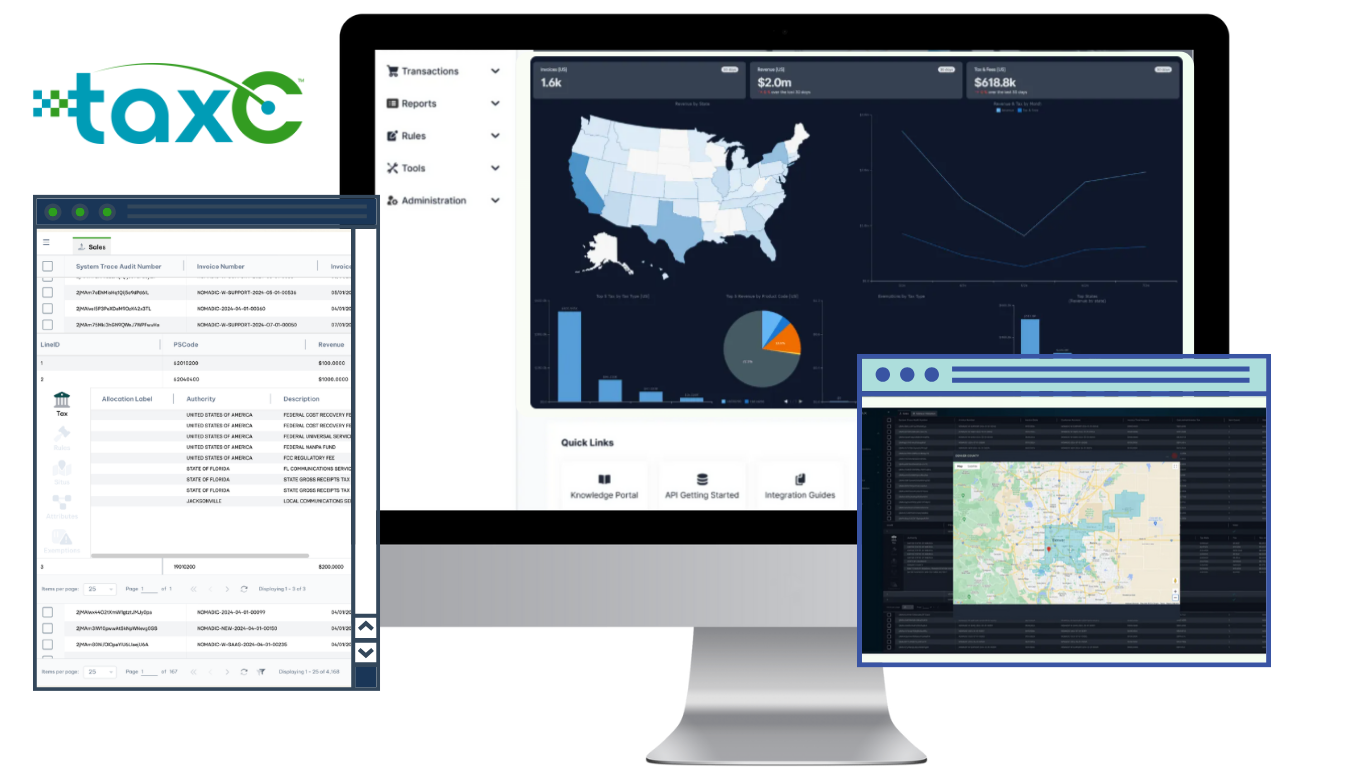
CeretaxtaxC Website Images taxc

Advanced Sales Tax Software + Human Oversight

Designed to eliminate the headaches of sales tax management, taxC™ streamlines tax calculations, filing, remittance, GL reconciliation, tax calendar management, jurisdictional correspondence, and more—all while ensuring your compliance with real, human oversight from a dedicated practitioner.


Our company does online sales and having the sales taxes in multiple states is so easy with the TaxConnex. Their service and support with all the filings and their knowledge of the various state sales tax laws is a huge relief every month.

Working with TaxConnex has been an amazing experience. Our relationship has allowed me to maintain my sales and use tax duties while also being able to tackle other projects without us having to hire an additional full-time employee to manage compliance and filings.

It’s important to have a partner that is open and honest with you. [Our practitioner] really does go above and beyond to handle everything for us. When I send them our monthly reports, they examine our data, ask me questions to double check that there aren’t any gaps or errors, and then file our reports. [Our practitioner] also goes the extra mile to make sure I understand everything and is always willing to jump on a call to simplify things for me when needed.

I can’t say enough about their service. I’ve been in the industry for a long time, and I’ve supervised people that do tax returns, even done them myself, but this [TaxConnex] is as good as it gets! Our core accounting system spits out two reports. We send them to our practitioner, we get a funds request within a day or two, and then I don’t think about it again. We went from no sales tax customer service to total customer service.

machinery max Conco | TaxConnex Dotmatics | TaxConnex Leasing | TaxConnex
Deb Hewitt - Machinery Max, Inc
Lorin Welsh - Sales Tax & Project Cost Accountant at Conco
Mercedes Collins - AR Specialist at Dotmatics
Anonymous - Controller at Leasing Division of Large Northeast Regional Bank
 

Sales Tax Compliance for Complex Leasing Businesses FAQs

  • How does sales tax work for leasing companies?

    Sales tax for leasing companies varies based on the type of lease and the state where the lease occurs. Depending on whether a company provides an operating lease or a finance lease, sales tax may be applied upfront, over the life of the lease, or not at all. These rules differ by state and jurisdiction, making consistent compliance challenging for leasing businesses operating in multiple locations.

  • How do taxability rules differ for operating leases and finance leases?

    Taxability for leasing transactions depends on how a lease is classified. Some states treat operating leases as taxable recurring transactions, while finance leases may be treated more like a sale. The timing and method of taxation can vary significantly by jurisdiction, requiring careful tracking of lease structures and applicable state rules.  

  • How is sales tax handled when leased equipment is used in multiple states?

    Sales tax on leased equipment is generally based on where the equipment is delivered and used. If the equipment moves between job sites or across state lines, the tax obligation may change depending on where the equipment is actually located.

    When heavy equipment such as excavators, cranes, or loaders is used in more than one state, tax may be due in each jurisdiction where the equipment is used. Because lessors may not always know the equipment’s exact location at all times, they must apply tax using the best available information at the start of the lease. If the equipment later relocates, additional sales or use tax obligations may arise.

    For leasing companies with multi-state equipment portfolios, tracking equipment location is critical to ensuring tax is applied correctly and reducing audit risk.

  • Is sales tax due upfront or on each lease payment?

    It depends on how the lease is classified for sales tax purposes. In most states, a true operating lease is taxed on each periodic lease payment, while a finance (capital) lease is treated as a sale and taxed upfront on the full value of the equipment.

    With an operating lease, sales tax is generally applied to the stream of lease payments as they are billed. In contrast, a finance lease is considered a transfer of ownership for tax purposes, meaning sales tax is calculated on the equipment’s total value at the beginning of the lease. The tax may be financed within the lease agreement, but it is due on the full amount upfront.


  • Are maintenance, delivery, or property tax pass-through charges taxable in a lease?

    Often, yes. In many states, sales tax applies to the total gross receipts from a lease of tangible personal property, which can include maintenance charges, delivery fees, and property tax reimbursements passed through to the lessee.

    For operating leases, states frequently treat ancillary charges as part of the taxable lease stream, even if those charges are separately stated. In a finance (capital) lease, certain charges such as delivery, installation, or finance charges may be excluded from the taxable base if they are properly structured and separately stated in the contract and invoice.

    Tax treatment varies by state and by lease classification. Because add-on charges can materially increase the taxable base, reviewing how these items are structured and invoiced is an important step in managing compliance and avoiding audit adjustments.

  • What happens if sales tax was not collected on lease payments?

    If sales tax was required but not collected, the leasing company is generally responsible for the unpaid tax, plus penalties and interest. In most states, the obligation to remit tax falls on the lessor, even if it was not charged to the lessee.

    For multi-year or multi-state leases, this can create significant exposure during an audit. Addressing potential gaps early can help reduce penalties and limit overall liability.