Advanced Sales Tax Compliance for Complex Manufacturing Businesses

With over 20 years of experience managing sales and use tax complexities, TaxConnex understands the nuances automation alone cannot solve. Our combination of technology, dedicated experts, and hands-on oversight helps every sales tax for a manufacturing company remain compliant, no matter how complex your operations become.

Ready for Reliable Compliance? Get in Touch!

Complexities Facing Manufacturing Companies

Each business and industry face different complexities, but TaxConnex has years of experience to help you remain compliant. A few complexities specific to the manufacturing industry you may face are: 

Website Images (2)


Exemption Certificates Management

Depending on where you are in the supply chain, managing exemption certificates is crucial for controlling manufacturing sales tax exposure. For example, a manufacturer that sells to other manufacturers will need to collect and validate exemption certificates from their customers.

Learn more  


Taxability Rules

 Understanding whether your purchases should be taxable or exempt can be confusing depending mainly on how the product is used. Are the purchases used in the manufacturing process (raw materials or components) or consumed within the business (office or shop supplies)? Each situation can have different impacts 


Nexus Rules

Manufacturers that sell to end users of their products, will need to track nexus and the taxability of their products or services and apply sales tax as applicable. They also need to pay special attention to states who track nexus by gross sales (which is the majority) rather than retail, as they must consider their wholesale sales in combination with their retail sales when determining if they've met thresholds.

Learn more by accessing our economic nexus threshold map here


No matter the sales tax complexity, TaxConnex takes it off your plate!

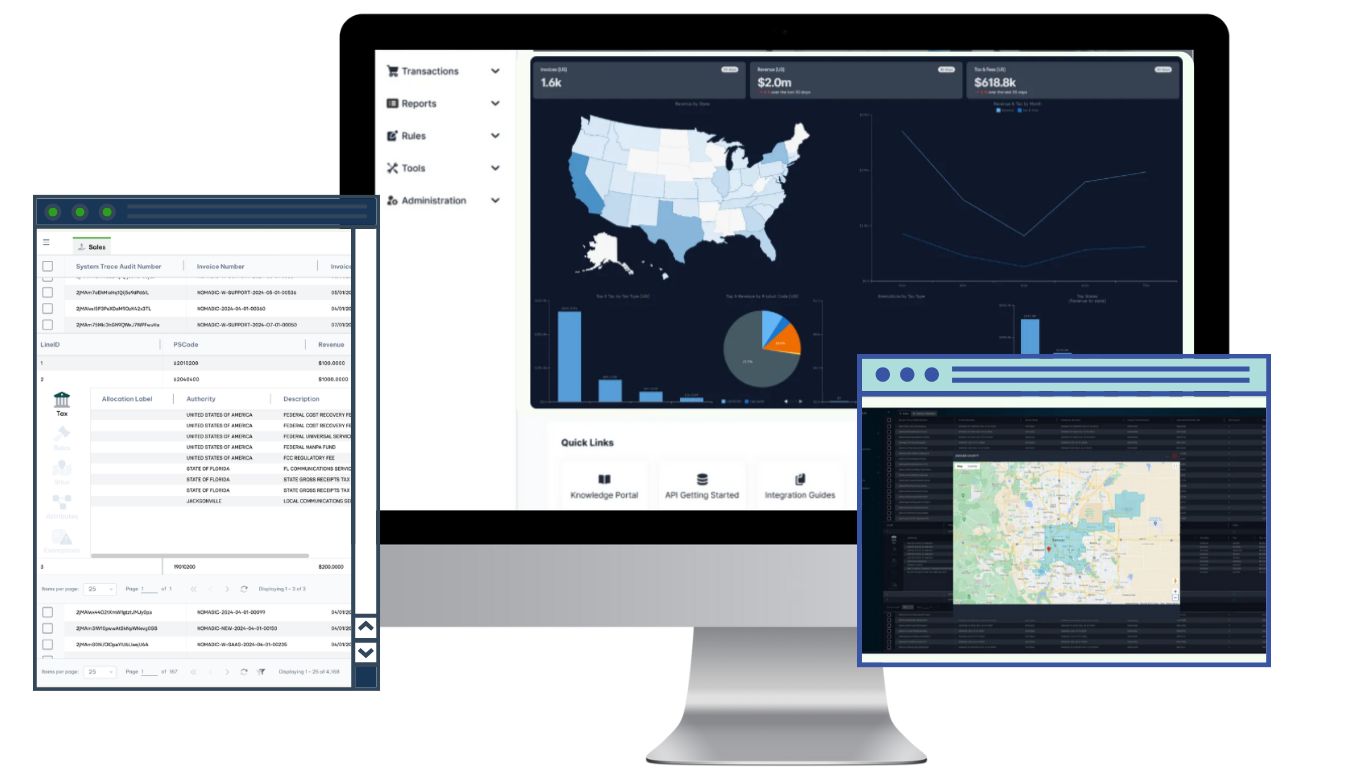
CeretaxtaxC screenshot

Advanced Sales Tax Software + Human Oversight

Designed to eliminate the headaches of sales tax management, taxC™ streamlines tax calculations, filing, remittance, GL reconciliation, tax calendar management, jurisdictional correspondence, and more—all while ensuring your compliance with real, human oversight from a dedicated practitioner.

We can always rely on a timely response to our inquiries. Our working relationship [with our practitioner] is great because questions can be asked in both directions. I would recommend TaxConnex to any and every business. Our team is no longer stretched during peak times and the cost of service, for the value and benefit we receive is exceptional.

We started our business six years ago, very small and lean. As the CFO and founding partner, I am still the only individual responsible for accounting and finance. I needed a place to go that would take care of everything else, so I could focus on the operations and that’s where I found TaxConnex.

My day is pulled in 20 different directions so [my practitioner] is great at keeping me on track and making sure we get all the data needed for filings and if a new project pops up, she is quick to respond and make sure we are managing sales tax correctly in each situation. As a small business, that is very important.
The main value I see from TaxConnex, is peace of mind with managing our sales tax obligations and knowing we have best-in-class processes in place to show the various states and jurisdictions that we want to be compliant.
Tellermate | TaxConnex Force of Nature | TaxConnex Nautilus Puzzles | TaxConnex Granite City | TaxConnex
Jon Powell – Financial Controller at Tellermate, Inc.
Mark Kost – CFO at Force of Nature
Mary O’Brien – Partner & VP of Sales & Marketing at Nautilus Puzzles
Cori Hornbeck – CFO at Granite City Electric Supply
 

Sales Tax Compliance for Complex Manufacturing Businesses FAQs

  • Are manufacturers exempt from sales tax?

    Not entirely. Manufacturers are generally exempt from sales tax on certain production-related purchases, but not all purchases qualify.

    Most states provide a manufacturing exemption for machinery, equipment, and materials that are directly used in the production process. However, items used for administration, storage, or general business operations are typically taxable. Because exemption rules vary by state, manufacturers must carefully determine which purchases qualify.

    Further more,  they are not exempt from collecting sales tax unless a resale certificate is collected.  Wholesale transactions may be exempt with proper resale documentation, but manufacturers selling direct to consumers or into states where they have nexus are generally required to collect sales tax on taxable sales. 

  • Why is validating and managing exemption certificates critical for manufacturers?

    Manufacturers must not only collect exemption certificates, they must validate and maintain them to support tax-exempt sales. Because sales of tangible personal property are presumed taxable, the burden is on the manufacturer to prove why tax was not charged.

    Resale and other exemption certificates must be complete, accurate, and applicable to the state and type of transaction. An incomplete or invalid certificate may be rejected during an audit, resulting in the manufacturer being assessed for uncollected tax, penalties, and interest.

    For manufacturers with customers across multiple states, managing exemption certificates can become complex. Certificates may expire, requirements vary by state, and some states require specific forms. Implementing a structured process to collect, review, and periodically update exemption documentation is essential to reducing audit exposure and protecting margin.

  • When do manufacturers owe use tax?

    Manufacturers owe use tax when sales tax was not paid on taxable purchases that are used, stored, or consumed in their operations. This often applies to equipment purchased from out-of-state vendors, online purchases, or items withdrawn from resale inventory for internal use.

    Use tax is one of the most common areas of audit exposure for manufacturers. Implementing controls to identify untaxed purchases can help prevent unexpected assessments and penalties.

  • Why are resale certificates important for manufacturers making wholesale sales?

    Resale certificates allow manufacturers to sell products tax-free to distributors, retailers, or other buyers who intend to resell those goods. When a customer purchases finished goods for resale, they provide a valid resale certificate so the manufacturer does not charge sales tax.

    Because sales of tangible personal property are presumed taxable, manufacturers must maintain valid resale certificates to support exempt wholesale transactions. If proper documentation is not on file, states may assess uncollected sales tax, penalties, and interest during an audit. For manufacturers with multi-state customers, managing resale certificates is a critical part of reducing sales tax risk.


  • Do manufacturers need to collect sales tax on direct-to-consumer website sales?

    Yes, if the manufacturer has established sales tax nexus in a state. Once nexus is created through physical presence or by exceeding a state’s economic nexus threshold, sales tax must be collected on taxable direct-to-consumer sales in that state.

    Even if most sales are wholesale and exempt with proper resale documentation, those wholesale transactions can still count toward economic nexus thresholds in states that count gross sales for economic nexus thresholds. In many states, gross receipts include both wholesale and retail sales when determining whether the threshold has been met. For example, a manufacturer may exceed a $100,000 economic nexus threshold primarily due to wholesale revenue, which then requires registration and collection of sales tax on its smaller volume of direct ecommerce sales.

    For manufacturers expanding into online sales, monitoring nexus across all revenue streams is critical to ensuring timely registration and compliance.

  • Does storing inventory in another state create sales tax nexus?

    Yes, in most cases it does. Owning inventory in a state, even if it is held in a third-party warehouse or fulfillment center, typically creates physical nexus.

    This is common for manufacturers selling through ecommerce platforms that use distributed fulfillment networks. Once nexus is triggered, the manufacturer may be required to register, collect sales tax on taxable sales, and file returns in that state.